Precision Psychiatry: International Network INPP Brings Partners Together in Stockholm
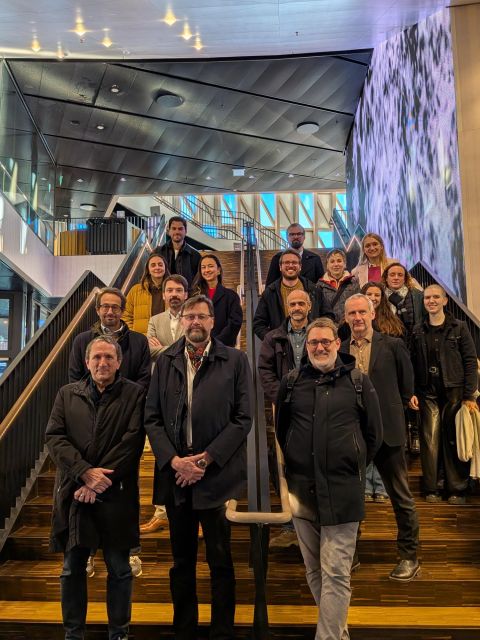
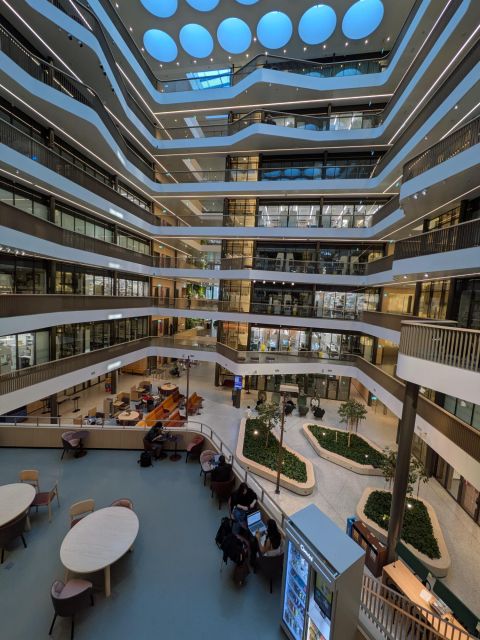
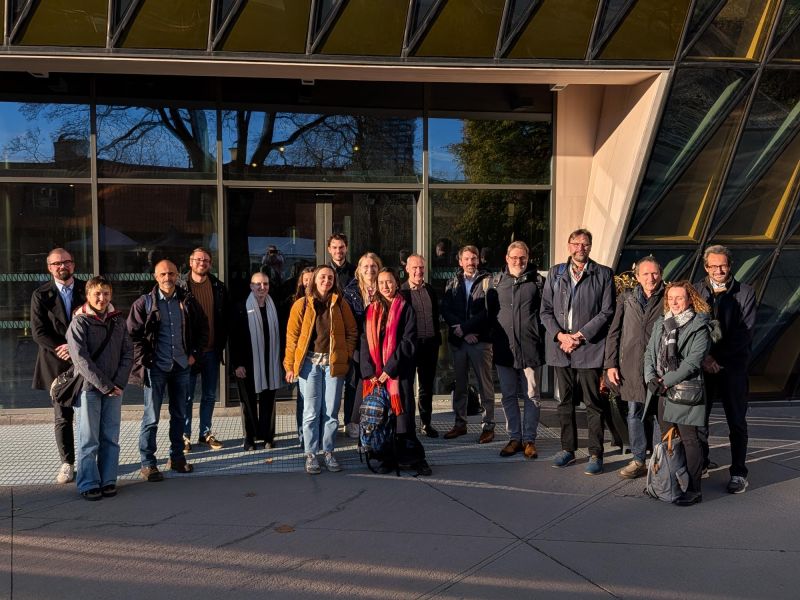
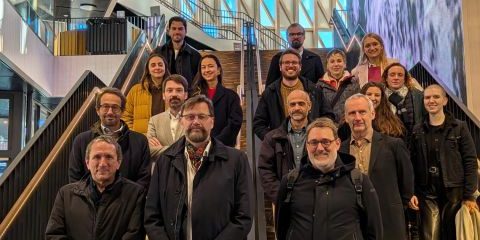
On November 4–5, 2026, the International Network on Precision Psychiatry (INPP) convened at Karolinska Institutet in Stockholm for two days of scientific meetings and international exchanges. The program featured updates on collaborative doctoral research projects, the sharing of research findings, and discussions on future opportunities for cooperation in precision psychiatry, with active participation from early-career researchers involved in PEPR PROPSY.
Launched by Inserm in 2024, the International Network on Precision Psychiatry (INPP) is an international thematic collaboration program designed to strengthen scientific partnerships and advance precision psychiatry research worldwide.
Hosted by Karolinska Institutet in Sweden, this fifth network meeting brought together international partners around a shared goal: developing cross-border research projects, fostering exchanges between research teams, and supporting the next generation of researchers in psychiatry.
Four doctoral research projects at the heart of international collaboration
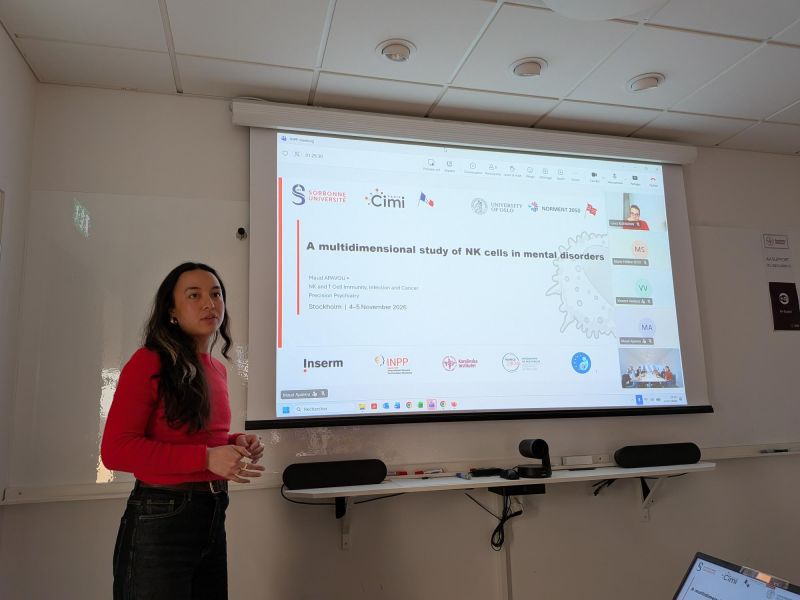
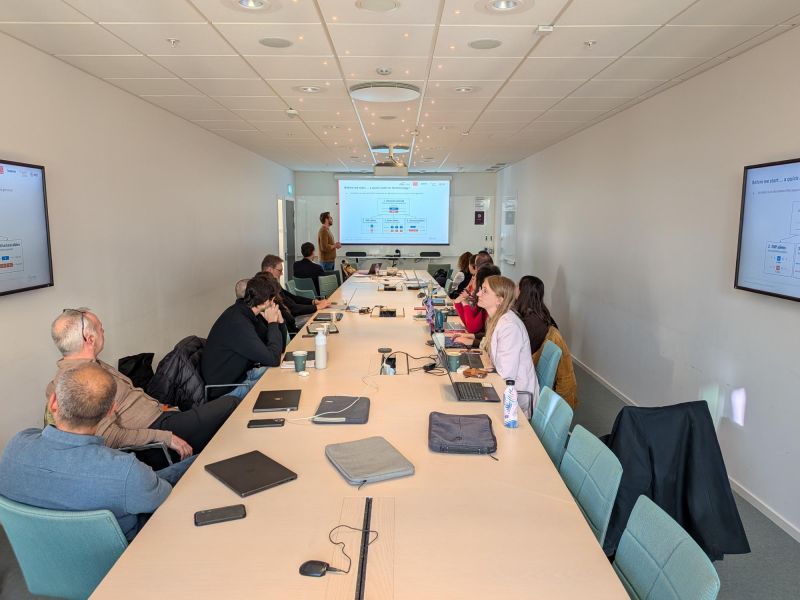
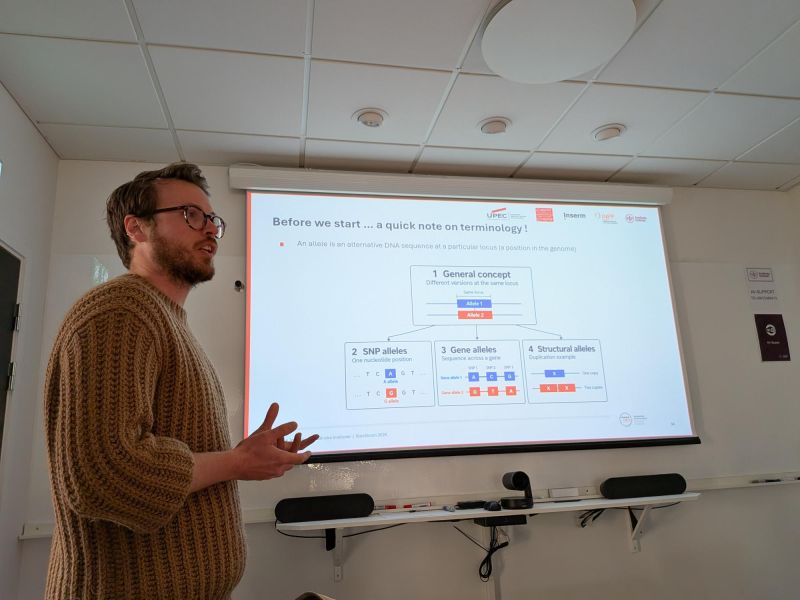
The first day, November 4, was devoted to the network’s annual internal meeting. During this session, four doctoral students presented progress on their collaborative research projects, conducted in partnership with teams from Cardiff University, the Université de Montréal, Karolinska Institutet, and the University of Oslo.
The projects covered several scientific areas:
- Severe sepsis and septic shock in people living with severe mental disorders: an interdisciplinary approach combining pharmacology, immunology, and health services research, conducted as part of a France–Sweden collaboration.
- NK cells and psychiatric disorders: a multidimensional study of these immune cells in schizophrenia, bipolar disorder, and autism spectrum disorder, as part of a France–Norway collaboration.
- Immunogenetics and psychiatric imaging: a French–UK project exploring the links between immunity, genetics, and neuroimaging.
- Nitric oxide and mother–newborn brain synchrony: a French–Canadian study using electroencephalography (EEG) and hyperscanning to investigate brain-to-brain interactions between mothers and their newborns.
The day continued with a tour of Karolinska Institutet’s laboratories and research facilities, including the Applied Developmental Neurobiology research group within the Department of Physiology and Pharmacology. The visit gave doctoral students an opportunity to learn about the work of Swedish research teams and strengthen scientific exchanges.
A French–Swedish symposium exploring new perspectives in precision psychiatry
On November 5, a French–Swedish scientific symposium brought together established researchers and early-career scientists to discuss recent advances in precision psychiatry.
The morning session focused in particular on precision psychiatry at the population level, with presentations on the use of artificial intelligence in psychiatric epidemiology, the real-world effectiveness of pharmacological treatments for severe mental disorders, and physical health trajectories among people living with these conditions.
The European project EU-MIND, which aims to reduce physical health inequalities among people living with severe mental disorders across Europe, also featured prominently. Presentations addressed mortality among people with severe mental disorders, European priorities for integrated physical and mental health care, and the economic and societal value of better-integrated care pathways.
Spotlighting the next generation of researchers
The afternoon highlighted the work of early-career researchers in a session dedicated to the next generation of precision psychiatry.
Several doctoral students and early-career researchers from Karolinska Institutet and PEPR PROPSY presented their work on a range of scientific topics.
Presentations by PEPR PROPSY early-career researchers notably showcased several key projects within the program:
- MetaboPsy: investigating immunometabolic abnormalities in mood disorders and psychotic disorders through a transdiagnostic approach.
- TRANSPSY-S: developing precision suicide prevention and suicidology approaches based on normative models and large-scale validation in bipolar disorder and schizophrenia.
- INTRUDE: developing a personalized real-time fMRI neurofeedback approach to treat treatment-resistant auditory hallucinations in schizophrenia.
The session was followed by a group discussion addressing a key challenge: how can discoveries involving biomarkers be translated into tools that can be effectively used in clinical practice?
Building a shared international scientific agenda
The meeting concluded with the INPP International Early-Career Researchers Forum, followed by a roundtable discussion on developing a shared scientific agenda.
Discussions focused in particular on cohorts, data, biomarkers, and training, with the aim of strengthening synergies among partner teams and identifying new opportunities for collaboration.
The program is available here.
Strengthening international collaboration to advance precision psychiatry
The two days in Stockholm highlighted the essential role of international collaboration in advancing precision psychiatry. By bringing together research teams from several countries, INPP facilitates the exchange of expertise, promotes the development of cross-border research projects, and supports the training of early-career researchers through structured scientific partnerships.
For PEPR PROPSY, this momentum provides an important opportunity to showcase the work of its research teams internationally, strengthen ties with major European and international research networks, and contribute to the development of new diagnostic and therapeutic approaches.